Exotic & Avian Care in Denver CO
A guide to Denver's exotic and avian vets: what specialized care covers, how to vet a provider, and how our rankings work.
What exotic and avian care covers
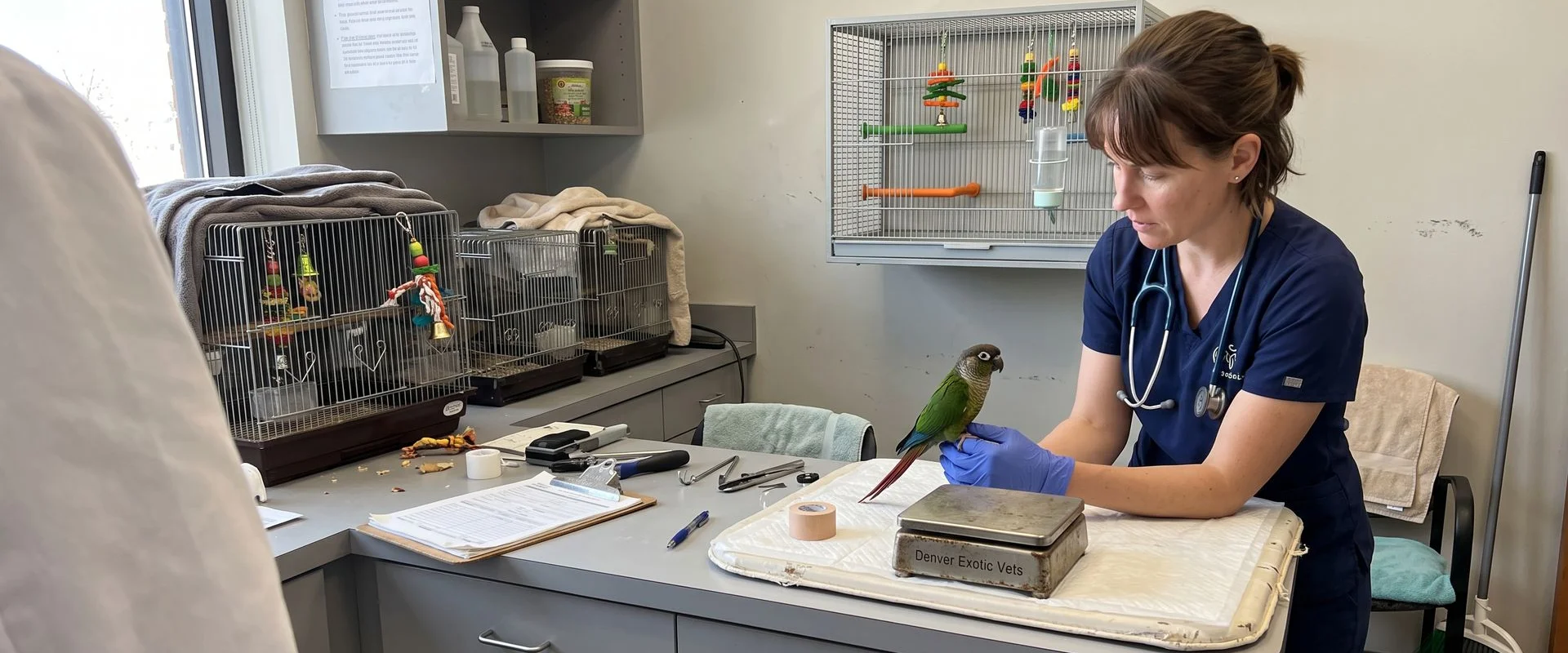
Birds, reptiles, rabbits, ferrets, and small mammals like guinea pigs or hedgehogs need medical knowledge that a standard dog-and-cat practice usually doesn't stock. This category includes wellness exams built around species-specific physiology, diagnostic work (bloodwork, fecal parasite checks, radiographs sized for small patients), beak and nail trims, feather and skin issues, GI and dental problems in rabbits and rodents, and emergency care for trauma, egg-binding, or sudden illness in birds, which tend to hide symptoms until they're seriously sick. Denver has 97 practices and individual vets listed here, ranging from general practices with one exotics-trained associate to dedicated avian and exotic-only hospitals.
What to look for before booking
Ask directly whether the vet is comfortable with your specific species. A clinic that handles reptiles well isn't automatically strong with parrots, and rabbit dentistry is its own skill set. Check for board certification or documented continuing education in avian or exotic medicine, on-site diagnostic equipment sized for small patients, and a realistic conversation about anesthesia risk, since exotics react differently to sedation than cats and dogs. Ask how after-hours emergencies are handled, since not every clinic offers overnight care for these species.
How our scoring works
We weigh species range, staff credentials, equipment on hand, and patterns in client feedback to rank the strongest options. See the full breakdown at our best exotic and avian vets guide, and check our methodology for how we score and verify every listing.
All exotic & avian care, by score
97 businesses. Filter and sort below, or open the full map view.













































Common questions about exotic & avian care
- How much does an exotic or avian vet visit cost in Denver?
- A basic wellness exam typically runs somewhere in the range of $50 to $100, but exotics often need extra diagnostics right away. Bloodwork, fecal tests, or radiographs can add $100 to $300, and anesthesia-required procedures like beak corrections or dental work on rabbits cost more. Prices vary by clinic and species, so ask for an estimate before you book.
- How often should birds and exotic pets see a vet?
- Most healthy birds, reptiles, and small mammals should have a wellness exam once a year. Older animals, or species prone to specific issues (rabbits with dental problems, birds with feather-destructive behavior) often need checks every six months. Any change in appetite, droppings, or activity level warrants a sooner visit, since exotics mask illness until it's advanced.
- What should I expect at a first exotic pet appointment?
- Expect a hands-on physical exam, questions about diet, housing, and habitat setup (temperature, UV lighting for reptiles, cage size for birds), and possibly baseline bloodwork or a fecal parasite screen. A good exotics vet will spend real time on husbandry, since diet and environment cause a large share of the health problems they see.
- How do I judge whether an exotic vet is actually qualified?
- Ask what percentage of their caseload is exotics versus dogs and cats, whether they've done specific training or certification in avian or exotic medicine, and how they handle emergencies for your species. A vet who answers specifically about your animal, rather than generally about 'exotics,' is usually the safer bet.